

Freelance income in Dubai can vary widely. Some freelancers earn a modest monthly side income, while others build full-time revenue through retainers, repeat clients, and specialist work. What you can earn depends on your niche, rates, billable hours, and how consistently you bring in clients.
What you can earn depends on your niche, your rates, and how steady your client pipeline is. What you keep depends on your costs, your billing structure, and how you manage quiet months.
Freelance income in Dubai can range from around AED 5,000–30,000 per month in early to mid stages, depending on your niche, rates, and how many hours you bill.
Estimates in this article are based on market data, including salary insights from Naukrigulf salary data.
Defining Freelance Income in Dubai
Freelance income in Dubai is the total revenue you generate through client work before expenses. It can fluctuate based on various factors, so it is important to distinguish between revenue and take-home pay.
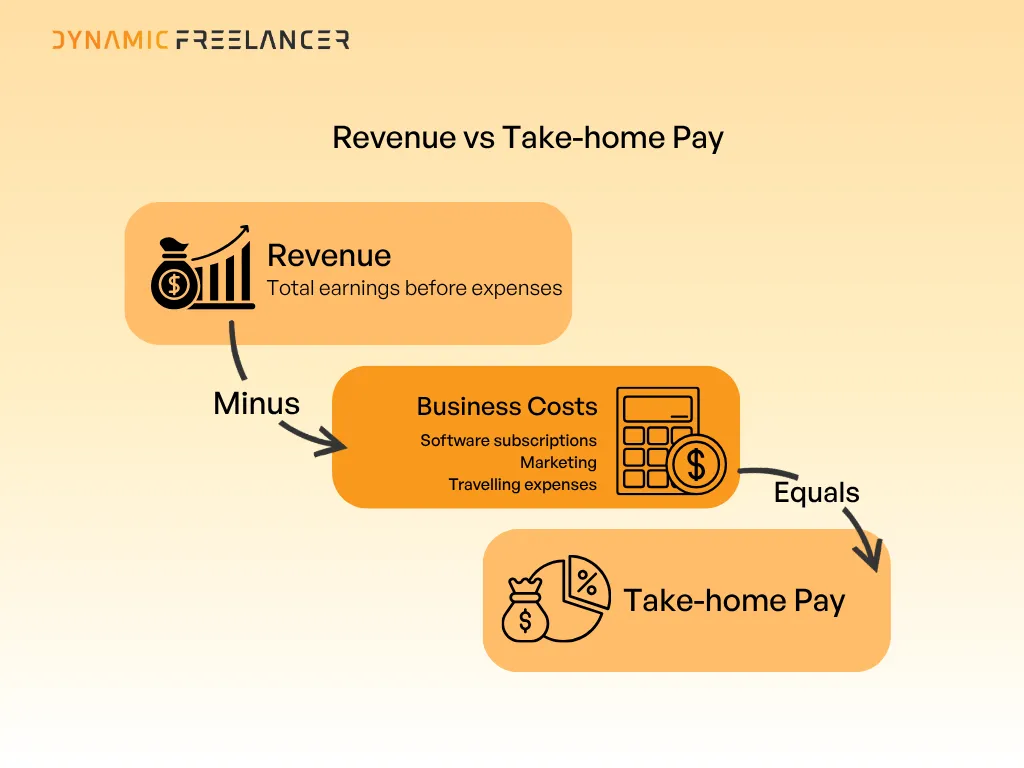
Revenue vs Take-home Pay
Revenue is the total amount you bill before expenses. Take-home pay is what remains after business and personal costs are covered.
Key business costs may include:
Software subscriptions
Marketing
Travel expenses
After these deductions, what remains is your take-home pay. Efficient expense management can increase your net income.
Factors Influencing Income
Your income can be shaped by your niche, experience, pricing model, target clients, and how consistently you secure work in the Dubai market. Understanding your market value and adjusting your rates accordingly can significantly impact your earnings.
Income Stages: From Starter to Premium
These ranges are monthly revenue estimates, and they can swing depending on your niche, rates, and how many hours you actually bill.
Starter stage: Many freelancers begin with smaller projects while they build proof and referrals. At this stage, it is common to see around AED 5,000–15,000 per month, typically driven by AED 100–250/hour pricing or AED 1,500–6,000 per project depending on scope.
Growth stage: As your portfolio strengthens, you can raise rates and take on higher-value work. Many freelancers in this phase target around AED 15,000–35,000 per month, often through higher project fees, better clients, and the first few retainers.
Premium stage: At the premium level, income becomes less about volume and more about positioning. Specialists with strong demand may reach AED 35,000–80,000+ per month, supported by larger project scopes and ongoing retainer clients.
Project-based Work vs Retainer Clients
Freelancers typically choose between project-based work and retainer clients. Each model has pros and cons that affect income predictability.
Benefits of Project Work
Project-based work offers flexibility and the chance to work with a variety of clients. However, income can be inconsistent, and periods between projects can lead to financial strain if not managed properly.
Advantages of Retainers
Retainer clients provide predictable monthly income, reducing financial uncertainty. This model allows you to focus on long-term projects, fostering deeper client relationships and stable earnings.
Understanding Billable vs Non-billable Time
Your monthly income depends on your rate and on how much of your time is billable. Admin, outreach, and business development still take time, even though they do not generate direct revenue. This affects how much income you can produce each month.
Budgeting for Freelancers in Dubai
Effective budgeting is essential for freelancers to cover their living expenses and reinvest in their business.
Cost of Living
Dubai living costs, including rent, groceries, transport, and utilities, should be factored into your income planning. Planning for these expenses ensures you can maintain a comfortable lifestyle while pursuing your freelance career.
Business Expenses
These include costs like software licenses, professional memberships, and marketing. Tracking these expenses is vital for accurate financial planning and ensuring enough revenue to cover them.
Building a Financial Buffer
Setting aside a portion of your earnings as a financial buffer can provide security against income fluctuations. This buffer is essential for covering unexpected costs and maintaining stability during slow periods.
Administrative Essentials in Dubai
Navigating the administrative landscape in Dubai is crucial for a successful freelance career.
Work Permissions
To freelance legally in Dubai, your work should be carried out under an appropriate and compliant work setup. Understanding these requirements is crucial for compliance and avoiding any legal issues.
Creating a Client Pipeline
A solid client pipeline ensures a steady flow of projects, reducing the risk of income gaps. Regularly networking and marketing your services can help maintain this pipeline.
Invoicing and Payment Terms
Clear billing processes and payment terms support smoother cash flow and reduce avoidable payment issues. Using invoicing software can streamline this process and minimise disputes.
In Dubai, income planning also depends on having the correct administrative and compliance foundations in place.
Contracts and Scope
Having clear contracts outlining project scope, timelines, and payment terms protects both parties. This clarity helps manage client expectations and reduces the risk of disputes.
Building a More Stable Freelance Income
Freelance income in Dubai can be rewarding, but it is rarely defined by rates alone. Your niche, pricing, client consistency, admin systems, and financial planning all shape what you actually earn over time. If you are considering freelancing in Dubai, the most useful next step is to assess your expected monthly costs, target income, and the type of client mix you would need to make freelancing sustainable.
Frequently Asked Questions
Find answers to common questions about this topic
What is a typical freelance income in Dubai?
How can freelancers ensure timely payments?
What are the main costs freelancers face in Dubai?
Why is a client pipeline important for freelancers?
What administrative tasks are essential for Dubai freelancers?
Disclaimer: This article is intended to provide practical, up-to-date information. Details may vary based on individual circumstances, location, or changes in regulations. The information provided is for informational and educational purposes only.