
.webp&w=1200&q=75)
As a highly skill freelancer in the UAE, maintaining existing client relationships is crucial for ensuring a stable monthly income. Client retention is strengthened by a consistent, systematic approach that builds trust and reliability.
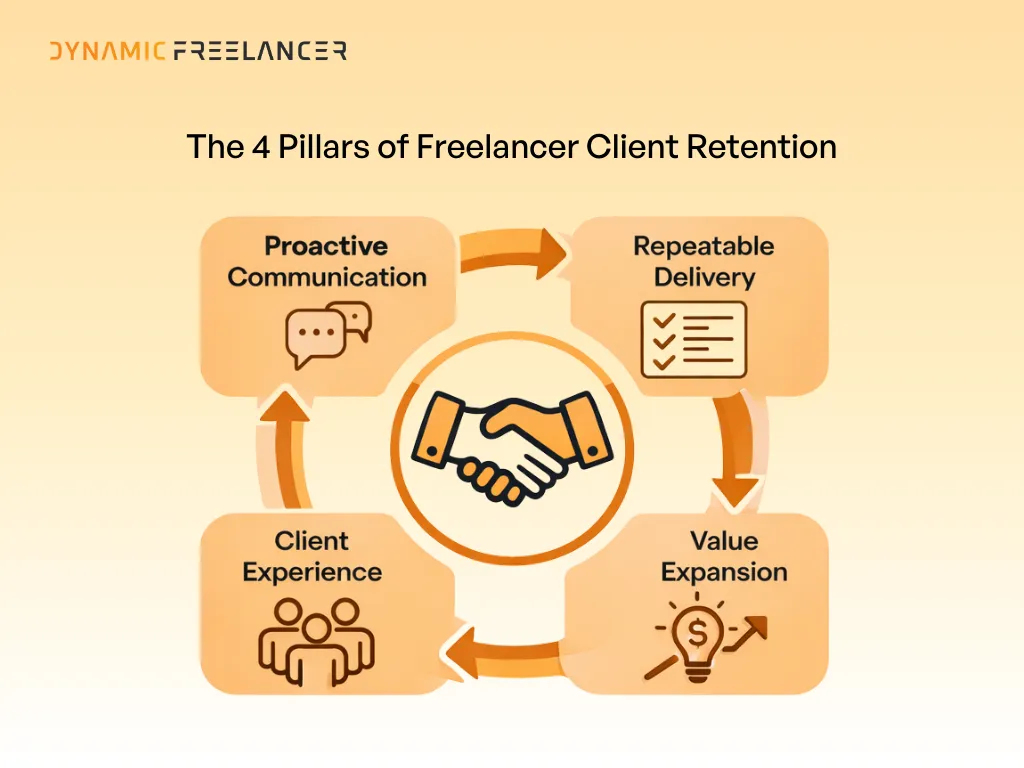
By focusing on proactive communication, repeatable delivery systems, value expansion, and enhancing the client experience, you can build a premium service brand that attracts better-fit clients.
Worth a look: CRM Basics: How to Use a CRM as a Freelancer
1. Proactive Communication
Proactive communication reduces uncertainty. It also prevents small concerns from turning into bigger frustrations. Many client relationships break down when silence creates assumptions. A clear communication rhythm keeps alignment strong and reinforces trust.
Set clear expectations from day one
Set expectations before work begins. This protects both the relationship and your time. A clear start also makes delivery easier, because the client understands the process and the boundaries.
Cover the essentials early:
Deliverables and scope boundaries
Timelines and milestone dates
Feedback process and revision rounds
A short written summary is enough. You can send it as a message or a one-page brief. If the client requests changes later, refer back to the agreed scope and explain how changes affect timing, cost, or priorities.
Create a reliable communication rhythm
Clients feel safer when your updates arrive consistently. Choose a rhythm you can maintain and set it as a standard. Weekly updates work well for most projects. For retainers, add a monthly performance or planning review.
Keep weekly updates short and structured. Include:
Progress since the last update
Next actions you will take
Inputs you need from the client
Risks or blockers, with suggested solutions
This format saves time and keeps the client engaged without overwhelming them. Use email templates to save time.
Prevent misalignment early
Misalignment often starts with vague feedback or shifting priorities. When you sense confusion, pause and confirm direction. Ask focused questions. Offer options. Then summarise the final decision in writing.
Small habits make a big difference here:
Send a recap after calls
Confirm deadlines after approvals
Clarify who signs off internally
This keeps momentum strong and reduces rework, which directly improves retention.
2. Repeatable Delivery Systems
Clients stay when they can depend on you. A dependable experience comes from repeatable systems. Systems reduce missed steps, speed up delivery, and keep your quality consistent across projects.
Build a lightweight quality checklist
A checklist protects your work from avoidable errors. It also improves consistency when you have multiple projects running. Your checklist should match your service, but it should stay practical enough to use every time.
Examples of checklist categories include:
Brand and formatting checks
File naming and handover readiness
QA and final review steps
Keep it short. Keep it relevant. Consistent quality is one of the strongest reasons clients choose to continue working with the same freelancer.
Use milestones to create confidence
Milestones provide visibility. They let clients see progress and give feedback at the right moments. This reduces late-stage changes and keeps projects on track.
A simple milestone structure works for most services:
Plan or outline
First delivery
Revisions
Final delivery and handover
Milestones also create natural communication touchpoints. Each milestone becomes a reason to update the client, confirm direction, and maintain trust.
Deliver with clear next steps
Client confidence increases when the next step is obvious. Each handover should include a short note that explains what the client should do next and what you will do next. This avoids delays caused by uncertainty and keeps the relationship moving forward.
A strong delivery message includes:
What was delivered
Where to review it
When feedback is needed
What happens after feedback
This turns each delivery into a controlled, professional experience.
3. Value Expansion
Value expansion increases revenue per client and strengthens retention. Clients stay when they see you contributing to outcomes, not only completing tasks. Value expansion works best when it aligns with the client’s goals and reduces friction.
Offer add-ons that make life easier
Clients respond well to add-ons that remove effort. These services typically save time, reduce complexity, or improve results.
Examples include:
A monthly optimisation pass
A reporting dashboard
A content calendar or campaign plan
Template packs for internal use
These options feel supportive because they reduce the client’s workload and improve consistency.
Make recommendations based on observations
The most effective recommendations come from what you see in the work. When you can link a suggestion to impact, it feels practical and relevant. Keep the tone calm and helpful. Focus on the outcome.
A simple structure works well:
Observation
Impact
Recommendation
Option for you to handle it
This approach preserves trust and avoids pressure. It also positions you as someone who thinks beyond the brief.
Convert projects into monthly retainers
Retainers grow from recurring needs. Look for repeating requests and patterns across the relationship. Common patterns include ongoing content, regular optimisation, continuous updates, campaign cycles, and recurring creative work.
A clear retainer package should include:
Monthly deliverables
Turnaround time expectations
Communication rhythm
Review or reporting schedule
Clarity improves retention because the client understands exactly what they receive and what they can rely on each month.
4. Enhancing the Client Experience
Client experience determines how easy you are to work with. When the process is smooth, clients stay. When the process feels chaotic, clients look for alternatives even if the work is strong.
Simplify channels and response expectations
Choose primary communication channels and define response expectations. Clients usually prefer clarity over constant availability. Set one main channel for decisions and approvals. If you allow fast messaging for urgent items, set boundaries that protect your time.
This reduces friction and improves trust. It also prevents misunderstandings caused by scattered messages across multiple platforms.
Strengthen onboarding
Onboarding sets the tone for the entire relationship. A clean onboarding flow creates confidence early. It also reduces repeated questions later.
A simple onboarding pack can include:
A welcome message with next steps
A short intake form
A timeline with key milestones
A feedback and approval process
This helps the client understand how you work and what you need from them to deliver well.
Make feedback easier to give
Feedback becomes stressful when it is vague. You can guide clients toward clearer feedback by asking specific questions and offering structured choices.
Examples:
“Which option fits your audience best, A or B?”
“Do you want the tone more direct or more conversational?”
“Should we prioritise speed or depth for this deliverable?”
When feedback feels easy, projects move faster. Faster projects reduce tension, and lower tension supports long-term retention.
Worth a look: Master Your Monthly Freelance Admin Routine
Actionable Steps
Client retention comes from consistency. Communicate proactively so clients always know what is happening. Deliver through repeatable systems so quality stays high every time. Expand value by recommending improvements tied to real needs. Keep the experience simple so working with you feels effortless.
Choose one change to implement this week, apply it to every client, and build from there.
Frequently Asked Questions
Find answers to common questions about this topic
What is the most important aspect of maintaining client relationships?
How can I upsell without being pushy?
Why is a repeatable delivery system important?
Disclaimer: This article is intended to provide practical, up-to-date information. Details may vary based on individual circumstances, location, or changes in regulations. The information provided is for informational and educational purposes only.